


Quick Answer: Clean the chain, coat it in oil, and store it somewhere dry, held apart so it cannot tangle. Keep sharp chains separate from dull ones so you are never guessing which is which at the stump.
Spare chains have a way of ending up in a bucket in the corner of the shop. They rust, they tangle, the sharp ones get mixed in with the ones you set aside to sharpen, and the one you need is always at the bottom. None of that is complicated to fix. Here is what actually matters when you put a chain away.
Key Takeaways:
-
Clean the chain first. Damp sawdust and dirt hold moisture against the steel, and pitch traps grit.
-
Oil it before it goes away. Clean it, then coat it with protective oil. For long-term storage, keeping the chain in a container of oil is one option.
-
Keep chains apart. A loose chain in a bucket hooks into its neighbors and tangles.
-
Separate sharp from dull, so you never fit a dull chain in the field.
-
Keep it dry and out of the sun. Avoid damp concrete floors and open buckets.
- Label by pitch, gauge and drive-link count. Chains look almost identical once they are off the saw, and bar length alone does not tell you which chain fits.
Why Chain Storage Goes Wrong
Nearly every storage problem comes down to one of four things, and they compound on each other.
Rust
A saw chain is hardened steel with dozens of moving joints. Left damp, rust forms on the cutters and in the joints.
Tangling
Loose chains in a bucket hook into each other. Pulling them apart is how cutting edges get knocked against each other, which dulls the very chain you were saving.
Mixing sharp with dull
If sharp and dull chains share a container, you end up fitting a dull chain in the field and finding out two cuts later.
Losing track of size
A chain for a 20-inch bar and a chain for a 16-inch bar look much the same coiled up. Without labeling, it is easy to carry the wrong one. Chains are identified by pitch, gauge and drive-link count, which Oregon's chain guide explains.

Clean the Chain Before You Store It
Chains come off the saw carrying sawdust, dirt, bar oil and tree pitch. Damp sawdust and dirt hold moisture against the steel, which can start rust. Pitch mainly traps debris and makes the chain harder to clean.
Safety first: Before you handle or remove a chain, shut off the saw, let it cool and make sure it cannot start. Remove the battery from a cordless saw, unplug an electric saw, and follow the manufacturer's safety steps for a gas saw. Wear protective gloves.
-
Brush the loose sawdust out of the drive links and the gullets.
-
Work the pitch off the cutters. Pitch sets hard and traps grit.
- Dry the chain fully before it goes into anything closed.
Pro-Tip: Clean the chain soon after cutting, before the pitch hardens.
Oil the Chain to Stop Rust
Oil protects a stored chain against corrosion and helps keep its moving joints free. The saw makers agree on the basics: for a break of three months or more, STIHL's guidance is to clean the guide bar and saw chain, spray them with oil and store them separately from the saw, and Husqvarna also recommends cleaning them and applying protective oil before extended storage. University of Missouri Extension suggests another long-term method: remove the chain and store it in a container of oil. That is one option, not a requirement. If you keep chains in a case, oil them lightly; there is no need to fill the case with oil.
For shorter stretches between jobs you do not need to submerge it. A light protective coating worked into the rivets and drive links is generally sufficient for short-term storage in dry conditions.
What about WD-40?
WD-40 displaces water, which is useful right after a wet day, but WD-40's own maintenance advice is to use bar oil to lubricate the chain itself. Follow it with proper bar and chain oil if the chain is going away for the season.
Keep Chains From Tangling
A chain that is held in place, apart from the others, cannot hook into anything else. That is the whole trick, and it is why a dedicated case beats a bucket.
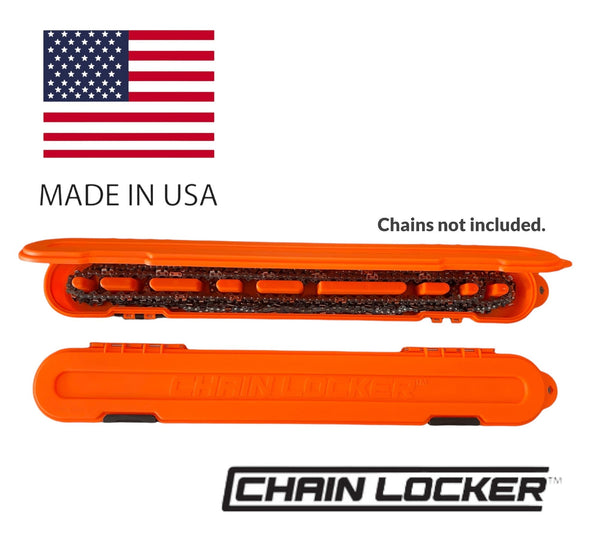
The Chain Locker Original is a single-row case that fits a minimum of eight chains for guide bars up to 20 inches. The Chain Locker Pro Series uses a two-row design with crescent-shaped end tabs, so chains for guide bars of 36 inches and longer wrap around them without tangling.
Separate Sharp Chains From Dull Ones
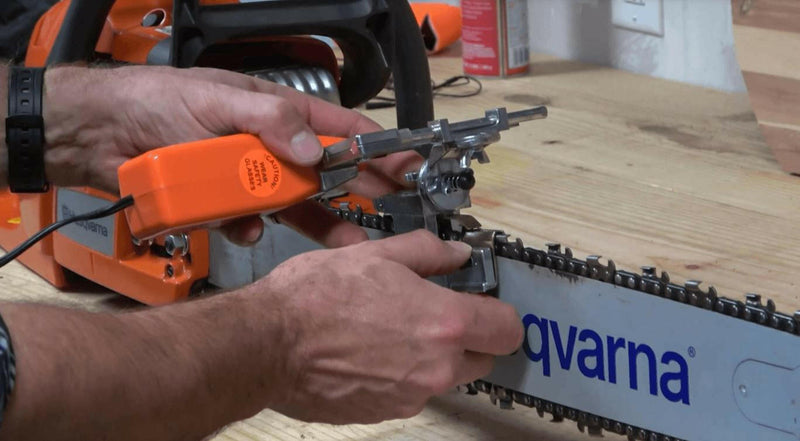
If you take one habit from this article, take this one. Decide which side of your storage is sharp and which is waiting to be sharpened, and never break the rule. When the dull side fills up, our guide to the types of chainsaw sharpeners covers the options.
The Chain Locker Pro Series has a separator guide running down the center for exactly this, so sharp chains sit on one row and dull on the other. There is also room alongside for a T-wrench or a file.
Pro-Tip: If your storage has no divider, use labeled compartments, colored tags or another clear marking system to keep dull chains apart from sharp ones. Any system works as long as you use it every time.
Where to Store Chains
Chains want the same conditions as any hardened steel tool.
-
Dry. Not on a concrete floor, which wicks moisture.
-
Out of direct sun. UV degrades plastic containers over time.
-
Closed, not open. An open bucket collects dust, damp and whatever else lands in it.
- Somewhere you will actually use. A case that lives in the truck gets used. One buried on a shelf does not.
Chainsaw Chain Storage Ideas Compared
Four methods people actually use, and where each falls down.
|
Method |
Works |
Falls down on |
|
Bucket or bin |
Costs nothing, holds plenty |
Chains tangle and knock cutters together. Sharp and dull are difficult to distinguish without labeling. |
|
Zip bags, one per chain |
Keeps chains apart, easy to label |
Bags trap moisture if the chain goes in damp. They tear. |
|
Pegboard hooks |
Easy to see what you have |
Chains hang coiled and collect dust. Not portable. |
|
Purpose-built chain case |
Chains kept apart in a closed case, travels with you |
Costs more than a bucket. |
Both Chain Locker cases are made in the USA. The Original is built from UV-enhanced polypropylene, with frame-reinforced hinges and stainless steel pins in the hinges and latches. Both sizes are in the LogOX catalog.
Check a Stored Chain Before You Use It
Before you fit a stored chain back on the saw, look it over for:
-
Rust on the cutters or in the joints
-
Chipped, cracked or otherwise damaged cutters
- Stiff links that do not flex freely
Once it is on the saw, confirm the chain is getting oil, and use the bar and chain oil your saw's manufacturer recommends.
Frequently Asked Questions
1. What is the best way to store chainsaw chains?
Clean, oiled and held so they cannot tangle, in a dry closed container, with sharp chains kept apart from dull ones.
2. What is a good storage box for chainsaw chains?
One that holds chains separated rather than loose. A single-row case suits chains for guide bars up to 20 inches; a two-row case takes short and long chains, including chains for guide bars of 36 inches and longer.
3. Do chainsaw chains rust in storage?
Yes, if they go away dirty or damp. Damp sawdust and dirt hold moisture against the steel, which is why cleaning and oiling matter more than the container.
4. Should you oil a chain before storing it?
Yes. Clean it, then coat it with protective oil, which is what STIHL and Husqvarna advise before extended storage. Keeping the chain in a container of oil is one long-term option. For short-term storage in dry conditions, a light worked-in coat of bar and chain oil is generally sufficient.
5. Can you spray WD-40 on a chainsaw chain?
It displaces water after a wet day, but WD-40's own advice is to use bar oil to lubricate the chain. Follow it with bar and chain oil if the chain is being put away.
6. How do you stop chainsaw chains tangling?
Store them held in place, apart from each other. Chains tangle when they are loose and free to hook into one another.
A Storage Habit That Actually Sticks
Clean it, oil it, store it so it cannot tangle, and keep sharp apart from dull. Four steps, every time you put a chain away.
The setup, by guide bar length:
-
Chains for guide bars up to 20 inches, single row: Chain Locker Original
-
Short and long chains, including 36-inch guide bars and longer, two rows with a sharp-and-dull separator: Chain Locker Pro Series
- Both sizes together: Original and Pro Series combo pack
A chain that was sharp when you put it away is only useful if it is still sharp when you need it. If you are putting a wider kit together, our overview of logging hand tools covers the tools that sit around the saw work, and our forestry tools guide for beginners covers what to buy first.



Leave a Comment
We read every one. Share your setup, ask a question, or drop a tip for fellow wood burners.