


Quick Answer: Start with dry, seasoned wood cut to one consistent length, wrap it into bundles of the same volume every time, and label each bundle with your business name, address and net volume. Check your state rules on firewood sales and movement before you sell.
Plenty of people only want a little firewood: a few campfires over the summer, a fire pit on the patio, or the odd evening in front of the fireplace. They will not buy a cord, but they will pick up a bundle or two. Selling to them is mostly about consistency. Every bundle should be dry, the same size and clearly labeled. Here is how to set that up.
Key Takeaways:
-
Sell dry wood only. EPA guidance is that firewood burns best at 20 percent moisture or less, and a moisture meter reading taken on a freshly split face is the reliable check.
-
Cut every piece to one length so bundles stack and wrap the same way.
-
Pick one bundle volume and stick to it. Consistency is what buyers notice.
-
Label every bundle with your business name, your address and the net volume it holds.
-
Check two sets of rules first: how firewood must be measured and labeled, and where it can be moved, which can be limited even within your own state.
- Many state parks limit what firewood campers can bring in, and certified heat-treated wood often qualifies for an exemption. Ask campgrounds what they allow before you count on them as customers.
Who Buys Bundled Firewood
Bundles reach people a cord never will. The usual buyers are:
-
Campers who need wood for a night or a weekend
-
Campgrounds, gas stations, convenience stores and local markets that resell bundles
-
Homeowners with a fire pit or a fireplace they use a few times a year
- Roadside and farm-stand customers who buy on impulse
Before you settle on a price or a bundle size, look at what the stores and campgrounds near you already stock. That tells you what your local buyers expect to see.
Check the Rules Before You Sell
Firewood is regulated in two separate ways, and both vary by state. Check with your state department of agriculture and its weights and measures office before your first sale.
How firewood must be measured and labeled
Many states base their rules on NIST Handbook 130. It is a model regulation, not federal law, so what applies to you depends on whether and how your state has adopted it. Under the handbook, bulk firewood is sold by the cord (128 cubic feet of wood, ranked and well stowed), by a fraction of a cord, or by the cubic meter. "Face cord," "rack," "pile," "truckload" and similar terms are not allowed when selling wood for fuel.
Packaged wood has its own rule. Under the 2026 edition of Handbook 130, packages under 16 cubic feet must show the quantity in liters and may also show it in cubic feet. A 0.75 cubic foot bundle is about 21 liters. Your state may follow an older edition or its own rules, so confirm the exact labeling it requires.
Moving firewood and invasive pests
Firewood can carry invasive insects, so many states restrict moving it, and the limits are not only at county or state lines. New York, for example, generally limits untreated firewood to within 50 miles of its source and does not allow untreated firewood to be brought into the state. Check the rules where the wood comes from, where it is going and at any campground you supply, rather than assuming local wood can travel freely.
The Don't Move Firewood campaign advises buying firewood where you will burn it, or buying wood that carries a certified heat-treatment seal. Wood labeled only "kiln-dried" does not count as certified heat-treated. Properly certified heat-treated wood may qualify for exemptions, but that is still subject to state rules and campground policies.
Pro-Tip: If you want to sell to campgrounds, ask whether they require certified heat-treated wood before you start production. It is far easier to plan for it than to find out after the wood is bundled.
Start With Dry, Consistent Wood
A bundle that will not light is a customer who does not come back. Dry wood is the foundation of the whole business.
Season it, then measure it
EPA guidance is to season softwood for at least six months and hardwood for at least twelve, and to burn wood at 20 percent moisture or less. Treat those times as a starting point: real drying time depends on the species, your climate, how small you split the wood and how you store it. Stack it off the ground and cover the top only, since covering the sides traps moisture.
Let the moisture reading decide when wood is ready. Split a representative piece and test the freshly exposed inside face with a moisture meter, aiming for a reading of 20 percent or less.
Racks keep the stack off the ground and the air moving. The Woodhaven firewood racks come in lengths from 2 feet to 16 feet.
Cut every piece to the same length
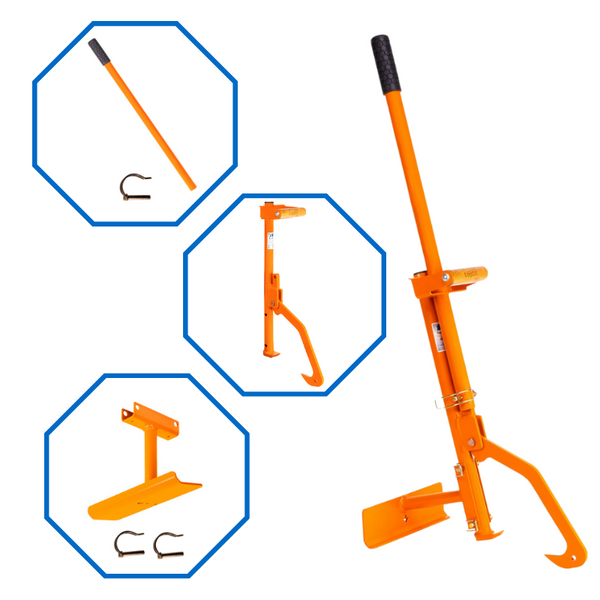
Uniform lengths wrap tightly and look professional on a shelf. The Mingo Marker rolls along a log and paints a cut line every 14, 16, 18 or 20 inches, depending on the wheel, so every piece comes out the same.

Decide Your Bundle Size
There is no single standard bundle. A common retail size is 0.75 cubic feet (about 21 liters), and some sellers use 1 cubic foot. The piece count depends on how thick you split the wood. What matters more than the exact size is that every bundle matches the label and the bundle before it.
-
Split pieces a little smaller than you would for a wood stove. Bundle buyers are often lighting a campfire, and smaller pieces catch faster.
-
Measure your first few bundles to set the bundler, then keep checking the volume as you go rather than judging by eye.
- Keep the declared volume on the label in line with your state rules.
Check the real volume of your bundles
A bundler's size or a count of pieces does not establish the volume you can declare on the label. What counts is the wood actually in the bundle. NIST Handbook 133, the guide inspectors use to check packaged goods, includes procedures for measuring bundled firewood (Chapter 3, Section 3.14). Use it to measure a sample of bundles when you set up, and repeat the check from time to time rather than relying on bundles looking consistent.
How to Bundle Firewood, Step by Step
Hud-Son puts each bundle at less than a minute on its bundlers. The process is the same on a hand-crank or an electric machine:
-
Load split wood into the bundler to your set volume.
-
Start the plastic wrap around the bundle.
-
Turn the crank, or press the foot pedal on an electric model, to wrap it tight.
-
Before the last turn, pause the wrap and slide your business label under the final layer so it stays protected from the weather.
- Cut the wrap and lift the bundle out.
Safety: Keep your hands clear of moving parts while the bundler is turning, and follow the manufacturer's operating instructions.
Pro-Tip: Turn jagged or splintered faces toward the center of the bundle. Sharp edges against the wrap are what tear it.
Wrap, twine or strapping?
Bundles can be tied by hand with twine, rope or plastic strapping, which is fine for small batches. Plastic wrap is faster and gives a cleaner, weather-resistant bundle, and it is what machine bundlers like the Hud-Son use.
Manual or Electric Bundler?
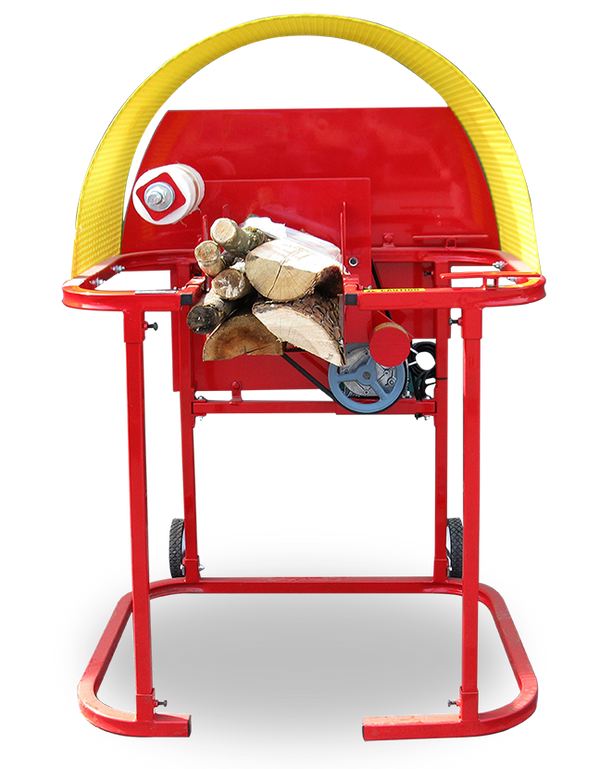
Both Hud-Son bundlers wrap wood from 14 to 24 inches long and are made in the USA. The Hud-Son Manual Firewood Bundler runs on a hand crank with no electricity, so it works anywhere on your site. The Hud-Son Electric Firewood Bundler uses a foot pedal to engage the wrap, so there is no crank to turn.
|
Manual Bundler |
Electric Bundler |
|
|
Power |
Hand crank, no electricity |
1/4 HP, single phase, 115 volt |
|
Wrapping action |
Turn the crank |
Foot pedal |
|
Wood length |
14 to 24 inches |
14 to 24 inches |
|
Bundle capacity |
Up to 12 x 12 inches across |
Up to 12 x 12 inches across |
|
Wrap |
Ships with 11-inch, 60-gauge wrap; takes 11- or 14-inch rolls |
Ships with 11-inch, 60-gauge wrap; takes 11- or 14-inch rolls |
|
Moving it |
Two handles, two wheels |
Two handles, two wheels |
|
Best for |
Sites without power, or seasonal sellers |
Higher volume where power is available |
Both take standard 11-inch or 14-inch wrap that office supply stores carry, so replacement rolls are easy to find, and the bundle tension is adjustable for different wraps. Whatever the machine holds, measure finished bundles to confirm the volume you put on the label. Full specifications are on Hud-Son's pages for the manual model and the electric model.
Label Every Bundle
A good label does two jobs: it meets your state rules and it brings repeat customers back to you.
-
Your business name and physical address. NIST's model packaging rules call for the address of the business responsible for the package, with limited exceptions, so a phone number alone may not be enough.
-
The net volume of the bundle, in the units your state requires
-
The wood species, if you want to sell on it
-
Where the wood came from, if your state requires it. In New York, for example, untreated firewood being moved must have a receipt or label naming its source.
- A heat-treatment certification, only if your wood is actually certified
How to Price Firewood Bundles
Bundle prices vary widely by region and by season, so set yours from local data rather than a national figure.
-
Check what campgrounds, stores and gas stations near you charge for a bundle.
-
Count how many bundles your first cord produces, then work out your full cost per bundle: the wood, wrap and labels, plus your labor, equipment, transportation and storage.
-
Price certified or kiln-dried wood separately if you offer both.
- Set wholesale and retail prices separately. Campgrounds and convenience stores that resell bundles need room for their own margin, so they pay less per bundle than a customer buying direct from you.
Where to Sell Firewood Bundles
-
Campgrounds and RV parks, once you know what firewood they allow
-
Gas stations and convenience stores near campgrounds and lakes
-
Hardware stores and local markets
-
A roadside or farm stand with a simple self-serve setup
- Direct to customers you already sell cords to
Set Up a Workflow That Keeps Up
Bundling is the last step. The bottleneck is usually earlier, in splitting and moving wood.
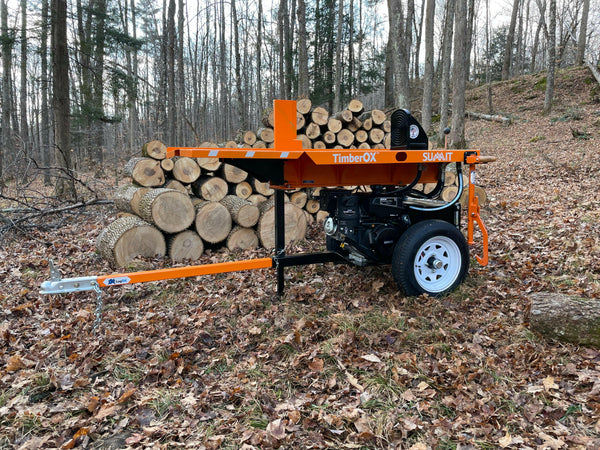
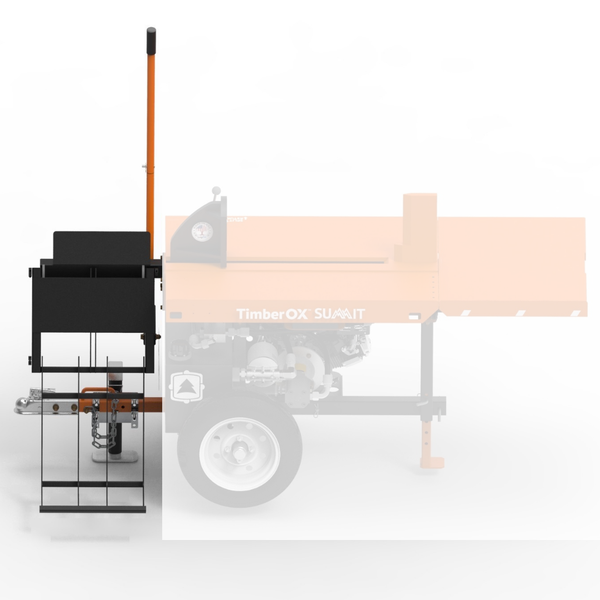
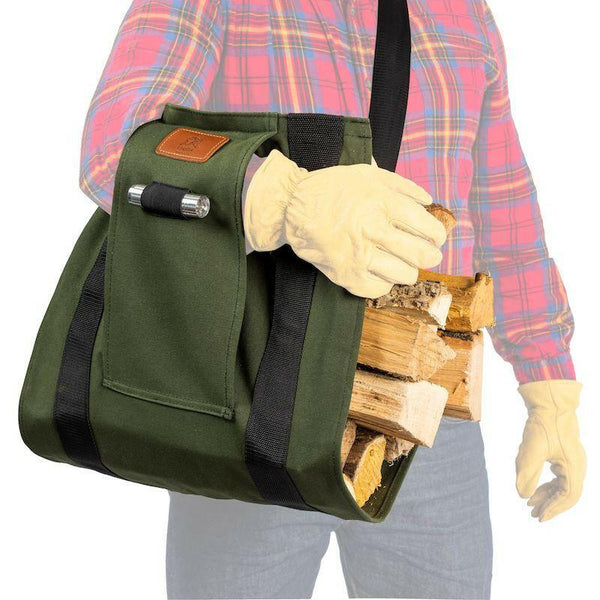
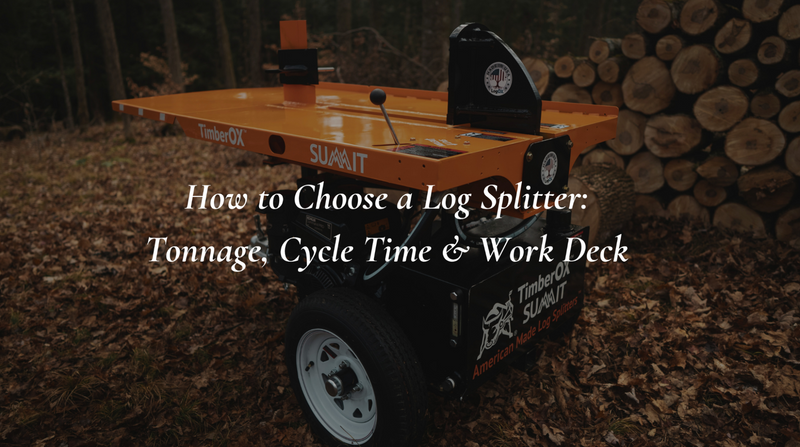
A fast splitter matters most. The TimberOX Summit 30-Ton Log Splitter pairs 30 tons of splitting force with a 4.7-second full cycle. To get split wood from the pile to the bundler, the WoodOX Firewood Sling carries firewood at your side while keeping a hand free, and the Woodhaven Firewood Cart moves up to 300 pounds per trip.

Frequently Asked Questions
1. How many pieces of firewood are in a bundle?
There is no fixed count. It depends on how thick you split the wood, and smaller campfire splits mean more pieces. What matters is keeping the volume the same from bundle to bundle.
2. How big is a bundle of firewood?
There is no single standard. A common retail size is 0.75 cubic feet, about 21 liters. Pick one size and keep every bundle the same.
3. Do you need a license to sell firewood?
It depends on your state. Some states license firewood dealers; Maryland, for example, requires a Forest Products Operator license from its Department of Natural Resources. In New York, anyone buying and moving untreated firewood needs a receipt or label that names its source, so sellers there should provide one. Check with your weights and measures office for labeling rules, your department of agriculture for movement rules, and your state forestry agency for any dealer license. Local rules can apply as well, so also ask your city or county about business licenses, roadside vending permits and zoning, and check which taxes you need to collect.
4. Can you sell firewood by the face cord?
Not under NIST Handbook 130, which many states adopt. It requires the cord, a fraction of a cord or the cubic meter, and bars terms like "face cord" and "rack."
5. What wrap is used for firewood bundles?
Plastic stretch wrap is the usual choice, and it is what machine bundlers use. The Hud-Son bundlers ship with 11-inch, 60-gauge wrap and take 11- or 14-inch rolls.
6. Is kiln-dried firewood the same as heat-treated?
No. The Don't Move Firewood campaign says most firewood with a USDA APHIS or state heat-treatment seal is considered safe to move, while wood labeled only "kiln-dried" should not be considered safe to move. Certified wood is still subject to state rules and campground policies.
Start Small, Stay Consistent
Dry wood, one length, one bundle size and a clear label. Get those four right and the rest of the business is finding buyers.
The setup, by how you work:
-
Selling seasonally, or working without power: Hud-Son Manual Firewood Bundler
-
Bundling in volume with power on site: Hud-Son Electric Firewood Bundler
- Cutting consistent lengths: Mingo Marker
If splitting is slowing you down, our guide on how to choose a log splitter covers tonnage and cycle time, and Firewood: The Economic Answer looks at the economics of heating with wood.





Leave a Comment
We read every one. Share your setup, ask a question, or drop a tip for fellow wood burners.